

Meal timing might not be the first thing you think about when considering how to boost your energy levels, but it’s a game-changer. By aligning when you eat with your body’s natural rhythm, you can power up your whole day. Eating at consistent intervals, like every 3–4 hours, keeps your energy steady and prevents that dreaded mid-afternoon slump.
Picture this: you start your day with a wholesome breakfast, maybe some oatmeal with a splash of honey and berries, and right about when you start to feel peckish mid-morning, you have a quick snack like a handful of almonds or a banana. This sets you up for a productive afternoon without the rollercoaster of high energy bursts followed by crashes.
There’s a bunch of benefits when you get the timing right. You’ll prevent those blood sugar spikes that can send you spiraling into sleepiness or crankiness. A steady intake helps keep your concentration on point and your mood stable. Plus, eating at regular intervals can curb overeating later, like late-night munchies.
Being mindful of meal timing does more than just fuel you for today. It plays a role in regulating your body’s natural clock and metabolism, which could lower your risk for chronic diseases in the long run. The perks of well-timed meals extend far beyond simply feeding a hungry stomach.
Deciphering the Best Eating Schedule for Enhanced Energy
Getting your eating schedule right is like finding the ultimate cheat code for all-day energy. Everyone’s body is different, so your perfect routine might need a bit of tweaking, but aim to fuel up every 3–4 hours. This keeps your energy levels humming along nicely without those pesky midday crashes.
The science behind this frequency revolves around energy management and blood sugar stability. Regular meals discourage extreme highs and lows that leave you feeling drained or jittery. Eating often helps maintain a consistent supply of nutrients, so you’re less likely to overindulge on unhealthier options out of sheer hunger.
Timing also plays a massive role. Research suggests that chowing down earlier in the day might be better for metabolic health, giving you an early energy boost that lasts. So, if you’re looking to refine your meal schedule, starting your eating earlier in the day can be a powerful tweak.
Take a moment to reflect on your current eating pattern. Do you find yourself feeling sluggish at certain times? You might be inadvertently skimping on meals or snacks. Whatever your routine, keeping it steady without skipping is key to staying vibrant and focused through the day. Click here for some healthy snacks to keep at work!
Food Choices that Fuel: What to Eat for All-Day Energy
Alright, let’s talk food. What you eat is just as crucial as when you eat. If you’re looking to keep your energy levels stable, focusing on balanced meals and snacks helps. Think of it as building a solid foundation.
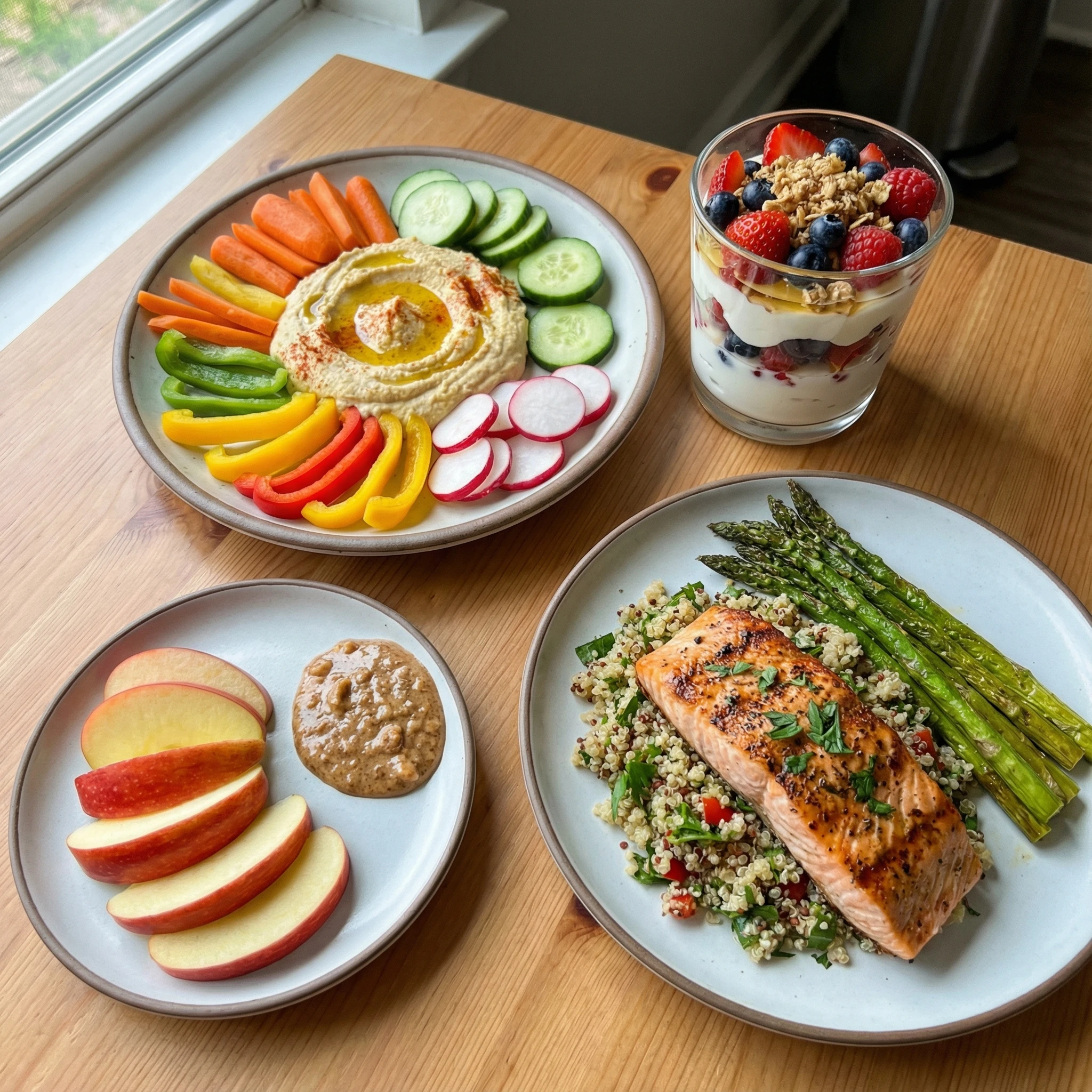
For starters, a good mix includes carbs, proteins, and healthy fats. Carbs provide quick energy, proteins sustain it, and fats keep things smooth. Something like yogurt with berries, an apple with almond butter, or a turkey sandwich hits the sweet spot.
Foods like hummus with veggies or salmon paired with quinoa pack a punch for longer-lasting energy. These combos release energy steadily, so you won’t find yourself raiding the pantry an hour later. Instead of grabbing a sugary snack that offers a quick spike but a fast dip, go for something more balanced.
It’s tempting to grab whatever’s quick, but preparing nutrient-dense snacks and meals ahead of time makes all the difference. Stock up on portable options, especially if your schedule tends to get hectic. Think about those busy days when meal prep ensures you have energy to tackle whatever comes your way. Click here for our favorite snack containers to help you stay organized on the go!
By selecting the right foods, you set up your body to work at its best. You support your mood, fuel your focus, and keep the energy drain at bay. Your choices can make or break your day, so choose wisely and listen to what your body needs.
Listening & Adapting: Personalizing Your Meal Timing
Meal timing isn’t one-size-fits-all, and that’s a good thing. Everyone has a unique rhythm and lifestyle, so it’s crucial to listen to what your own body is saying. The common guideline of eating every 3–4 hours works well for many people, but it’s just a starting point.
Your activity level, stress, sleep patterns, and personal hunger cues play a big role in determining what works best for you. Ever found yourself shaky, irritable, or experiencing strong cravings? Those are signs you might be stretching too long between meals.
Adjusting your meal timing isn’t about sticking to a strict schedule. It’s about flexibility and understanding. Notice how your body feels at different times of the day—are you more alert after breakfast or sluggish before lunch? Adjusting your eating schedule can improve these fluctuations.
There’s more to hunger than just a grumbling stomach. Thirst, fatigue, and even boredom can masquerade as hunger, leading to unnecessary snacking. Tuning in to your body’s signals can help identify the real needs rather than reaching for a quick fix.
Personalizing your timing is also key if you have specific needs, like intense training sessions or if you’re pregnant. Your energy demands are different, and your meal schedule should reflect that. Pay attention to how your energy levels fluctuate and tweak your meals to support that.
Common Pitfalls & Practical Tips for Successful Meal Timing
Meal timing seems straightforward, but tripping up on common pitfalls is easy, especially when life gets busy. Skipping meals often leads to raiding the fridge later and overdoing it at dinner. This can throw your energy balance completely out of whack.
Avoid relying on quick fixes like sugary snacks or caffeine to get through slumps. They might give an immediate boost, but it’s short-lived, often followed by a sluggish crash. Opt for slower-releasing energy foods instead.
Mistaking thirst, fatigue, or even boredom for hunger isn’t uncommon. Keeping hydrated and being mindful about what your body’s really asking for can keep you from unnecessary snacking.
Finding a routine that’s flexible yet consistent is key for maintaining energy. Life’s rhythm changes, and your meal timing should have some wiggle room too. Prepping snacks ahead of time, especially simple and portable ones like nuts or fruit, ensures you’re never caught off guard.
If you’ve got a chaotic schedule, simple meal plans are game-changers. They’re not just for health gurus—everyday people like parents, students, and shift workers benefit as well. Having a plan helps you avoid long gaps between meals and stay on track.
Of course, if you have specific needs like pregnancy or intense physical training, a personalized approach is the way to go. Keeping your unique requirements in mind ensures your energy stays consistent and supports long-term health. Monitoring how you feel and adjusting accordingly keeps things running smoothly.